
House bugs guide
House Centipedes, Carpet Beetles and Other House Bugs
A leggy centipede racing across the basement floor, tiny fuzzy larvae in a closet, or stink bugs on the window in fall? These are some of the most common bugs in Edmonton houses. This guide explains what each one is, whether it's harmful, and how to get rid of it.
5.0 from 100 Google reviews (as of October 2026) · Local Edmonton team
Which bug is in my Edmonton house?
The most common crawling bugs in Edmonton homes are house centipedes, silverfish, spiders, carpet beetles and, in spring and fall, ants, stink bugs and boxelder bugs. Most are harmless to people. What they tell you is useful, though: centipedes and silverfish point to moisture, and carpet beetles point to a hidden food source.
Use this quick table to narrow it down, then jump to the section for your bug.
| Bug | What it looks like | Where you see it |
|---|---|---|
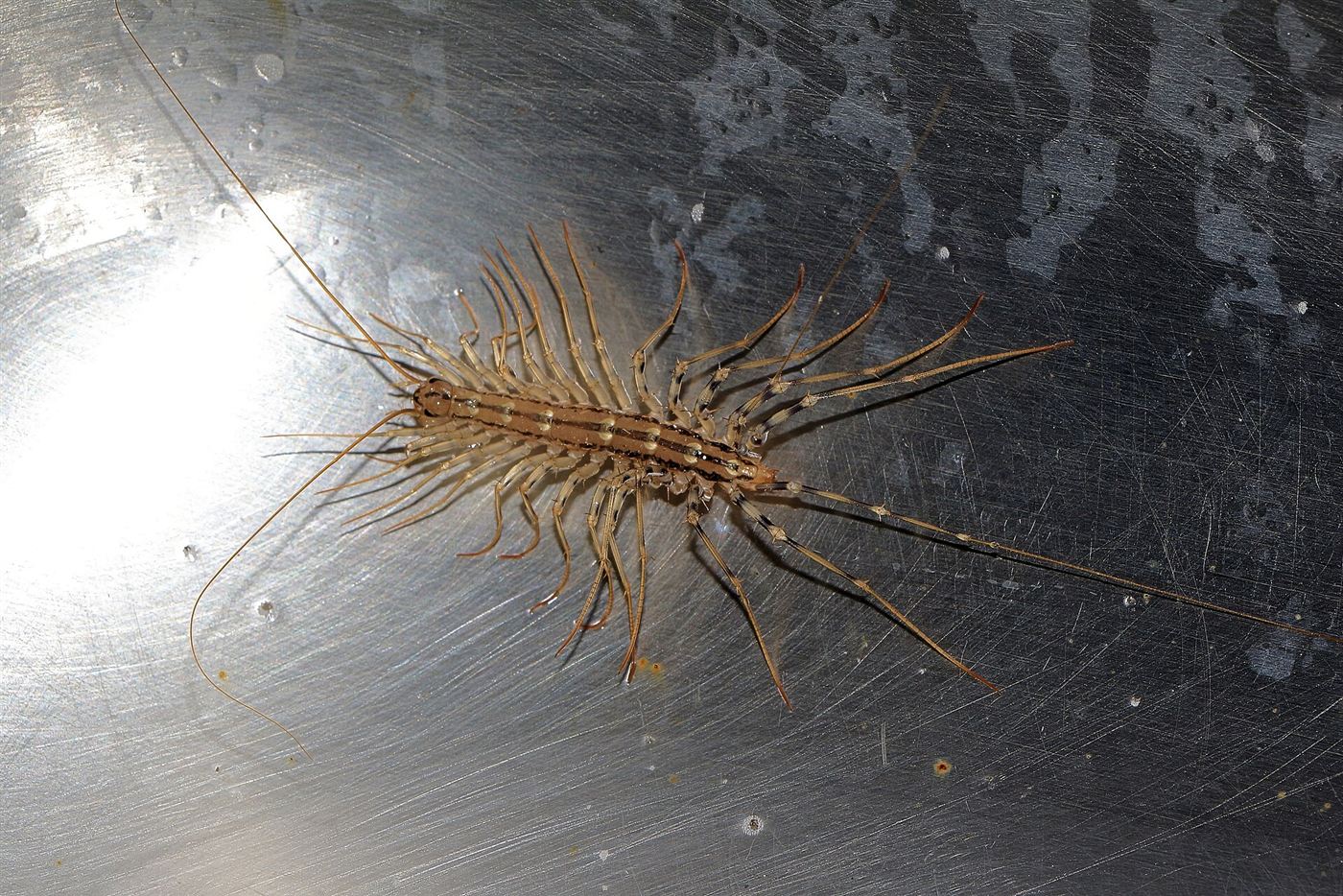
| House centipede | Yellowish-grey, about 2–4 cm, with 15 pairs of very long striped legs; moves very fast | Basements, bathrooms, floor drains, laundry rooms |
| Carpet beetle larvae | Small (about 3–5 mm), carrot-shaped, banded brown and covered in bristly hairs | Closets, under furniture, rug edges, stored wool and pet food |
| Adult carpet beetle | Tiny round beetle, 2–3 mm, mottled or black | Windowsills in spring and early summer |
| Stink bugs and boxelder bugs | Shield-shaped stink bugs; boxelder bugs are black with red-orange markings | Sunny walls, window frames and attics in fall |
| Pharaoh ants | Very small (about 2 mm), pale yellow to light brown | Kitchens and bathrooms in apartments and condos |
| Silverfish | Silvery, wingless, carrot-shaped, three tail bristles | Bathrooms, basements, boxes of paper |
For silverfish, see our silverfish guide. Pharaoh ants are covered on our ant control page, and spiders on our spider control page.
House centipedes: what they are and why they're in your basement
House centipedes are fast, many-legged predators that live indoors in damp areas and hunt other insects. In Edmonton they're found mostly in basements, bathrooms and around floor drains. They're mostly harmless to people and pets, and a steady number of them usually means there's moisture and other bugs for them to eat.
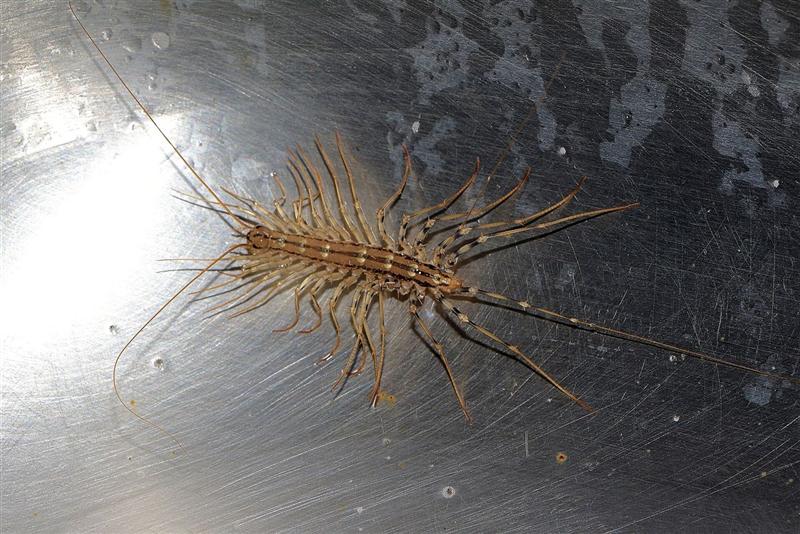
House centipedes (sometimes searched as "home centipedes") can't survive Edmonton winters outdoors, so the ones you see are living inside the house year-round. They hide in cracks, under boxes and in floor drains during the day and come out at night to hunt silverfish, spiders, carpet beetles, ants and even bed bugs. That's why they often show up alongside a silverfish problem.
Are house centipedes harmful?
Not really. According to Health Canada, most house centipedes can't break human skin with a bite, and a bite isn't dangerous to pets. The bigger issue is that many people find them unsettling, and a lot of them in one place is a sign the basement is too damp.
How to get rid of house centipedes
- Dry out the basementRun a dehumidifier to keep humidity around 40 to 50 percent, fix leaks at the water heater, washer and plumbing, and keep the sump pit covered.
- Take away their foodFewer silverfish, spiders and other insects means fewer centipedes. Clear cardboard and clutter off basement floors.
- Seal their way inCaulk cracks in the foundation and along sill plates, fit door sweeps, and keep floor drains covered or water in the traps.
- Fix the outsideSlope soil away from the foundation, and move leaf litter, mulch and firewood away from the walls.
Carpet beetles and carpet beetle larvae
Carpet beetle larvae are small, fuzzy, banded grubs that eat wool, silk, fur, feathers, pet hair and some dried foods. The larvae do the damage, not the adults. The most common sign in a home is their shed skins, which look like tiny hollow, bristly casings left in closets, drawers and along baseboards.
Adult carpet beetles are tiny round beetles that live outdoors on flowers and fly in through open windows in spring and early summer, which is why you often find them on windowsills. Indoors, females lay eggs in dark, undisturbed places with a food source nearby: under heavy furniture, in rug edges, in closets of wool clothing, in a bag of pet food, or in a bird or wasp nest in the attic.
Signs of carpet beetles
- Shed larval skins in closets, drawers, heat vents and along baseboards. The City of Edmonton notes these are the most common sign people find.
- Irregular holes in wool sweaters, blankets, felt, rugs and upholstery, often in folds or hidden areas.
- Small fuzzy larvae crawling slowly near the damage, or in dried food and pet food containers.
- Tiny round beetles on windowsills and light fixtures in spring.
Often mistaken for bed bugs: carpet beetle larvae don't bite, but their hairs can irritate skin and cause itchy bumps. If you have itchy spots but find fuzzy larvae instead of flat, reddish-brown bugs, read our bed bug guide to compare the signs.
How to get rid of carpet beetles
- Find the sourceCheck closets, wool rugs, under furniture, stored clothing, pet food, dried pantry goods, and the attic for old bird or wasp nests.
- Vacuum thoroughlyVacuum baseboards, cracks, heat vents, closet floors and under furniture, then empty the vacuum into a sealed bag outdoors.
- Launder or freeze affected itemsWash and dry fabrics on high heat where the label allows. Items that can't be washed can be sealed in a bag and frozen for several days.
- Store things sealedKeep wool, furs and seasonal clothing in sealed plastic bins or garment bags, and keep pet food and grain products in airtight containers.
Stink bugs and boxelder bugs in the fall
Stink bugs and boxelder bugs are fall invaders. As Edmonton nights get cold in September and October, they gather on warm, sunny walls and squeeze in through gaps around windows, doors, siding and vents to spend the winter. They don't bite, breed indoors or damage the house, but they can show up in large numbers.
Boxelder bugs (sometimes called "elder bugs") are black with red-orange markings and feed on Manitoba maple (boxelder) trees, which are common in Edmonton yards and boulevards. Stink bugs are shield-shaped and release an unpleasant smell if squashed or disturbed. Both often appear on warm winter days, when they wake up inside walls and wander into living areas.
- Seal gaps in late summer around window and door frames, siding, utility lines and attic vents, before the bugs start looking for shelter.
- Repair torn screens and fit door sweeps.
- Vacuum, don't squash the ones that get inside, especially stink bugs, then empty the vacuum outdoors.
- Skip indoor sprays: they don't stop the bugs hidden in wall voids and aren't needed for a harmless seasonal visitor.
When should you call a professional?
Most house bugs can be handled with moisture control, cleaning and sealing. Call a professional if you can't identify the bug, if you're seeing them in several rooms, if clothing or stored items are being damaged, or if the problem keeps coming back after you've fixed the obvious causes.
A pest inspection identifies exactly what you're dealing with, finds where it's coming from, and tells you whether you need a treatment at all. When a treatment is needed, we use products registered with Health Canada's PMRA, applied according to the label and targeted at the hiding spots rather than sprayed across open rooms.
Call (780) 262-3335 with a photo of the bug and we'll tell you what it is and what to do next. See all our pest control services, typical Edmonton pest control prices, or browse our other Edmonton pest guides.
Written and reviewed by the Alberta Pest Services team in Edmonton · Last updated October 2026
Frequently asked questions
Are house centipedes dangerous?
No. Health Canada describes house centipedes as mostly harmless: most can't get their jaws through human skin, and a bite isn't dangerous to pets. They eat other household insects such as silverfish, spiders and carpet beetles. Seeing them often is a sign of dampness and of other bugs for them to hunt.
Why do I have centipedes in my basement?
House centipedes need moisture and food. Damp basements, floor drains, sump pits and bathrooms give them both, especially when silverfish or spiders are around. Lowering humidity with a dehumidifier, fixing leaks and sealing gaps at the foundation removes what draws them in.
Do carpet beetle larvae bite?
No. Carpet beetle larvae don't bite, but their tiny bristly hairs can irritate the skin of some people and cause itchy bumps that are easily mistaken for bed bug bites. If you find small fuzzy larvae or their shed skins near where you sleep, check for carpet beetles before assuming bed bugs.
What do carpet beetle larvae eat?
Carpet beetle larvae eat animal-based materials: wool, silk, felt, feathers, fur, leather, pet hair and lint, plus dead insects and some dried foods like grain products and pet food. Damage shows up as irregular holes in wool clothing, rugs and blankets, usually in dark, undisturbed spots.
Why are there stink bugs in my house in the fall?
Stink bugs and boxelder bugs look for a sheltered place to spend the winter when temperatures drop. They gather on sunny walls and slip in through gaps around windows, doors, siding and vents. They don't breed indoors or damage the house. Sealing gaps in late summer is the best prevention.
When should I call a professional for house bugs?
Call a professional if you're seeing bugs in several rooms, can't find the source, notice damage to clothing, rugs or stored items, or aren't sure what the bug is. An inspection identifies the species, finds where they're coming from and sorts out whether a treatment is needed at all.
Related
“Great service, fair pricing, and excellent results.”